A Roth conversion can be a smart way to give your retirement plan more flexibility, especially if you want to create a source of future tax-free income. The basic idea is simple: you move money from a traditional IRA or other eligible pre-tax retirement account into a Roth IRA. The tradeoff is that you may owe taxes today, but qualified Roth IRA withdrawals can be tax-free later (Internal Revenue Service 2025b).
A Roth conversion can be a smart way to give your retirement plan more flexibility, especially if you want to create a source of future tax-free income. The basic idea is simple: you move money from a traditional IRA or other eligible pre-tax retirement account into a Roth IRA. The tradeoff is that you may owe taxes today, but qualified Roth IRA withdrawals can be tax-free later (Internal Revenue Service 2025b).
For many retirees and pre-retirees, the decision is not just about this year’s tax bill. It is about what your income may look like five, ten, or twenty years from now. McLane Advisors helps clients look at Roth conversions as part of the bigger picture: retirement income, required withdrawals, estate goals, tax planning, and long-term financial security.
A Roth conversion happens when money from a traditional IRA is moved into a Roth IRA. The IRS explains that you can convert all or part of a traditional IRA into a Roth IRA, and that the conversion is treated as a rollover, regardless of the method used (Internal Revenue Service 2025a). This can be done through a rollover, a trustee-to-trustee transfer, or a same-trustee transfer.
Traditional IRA vs. Roth IRA Taxes
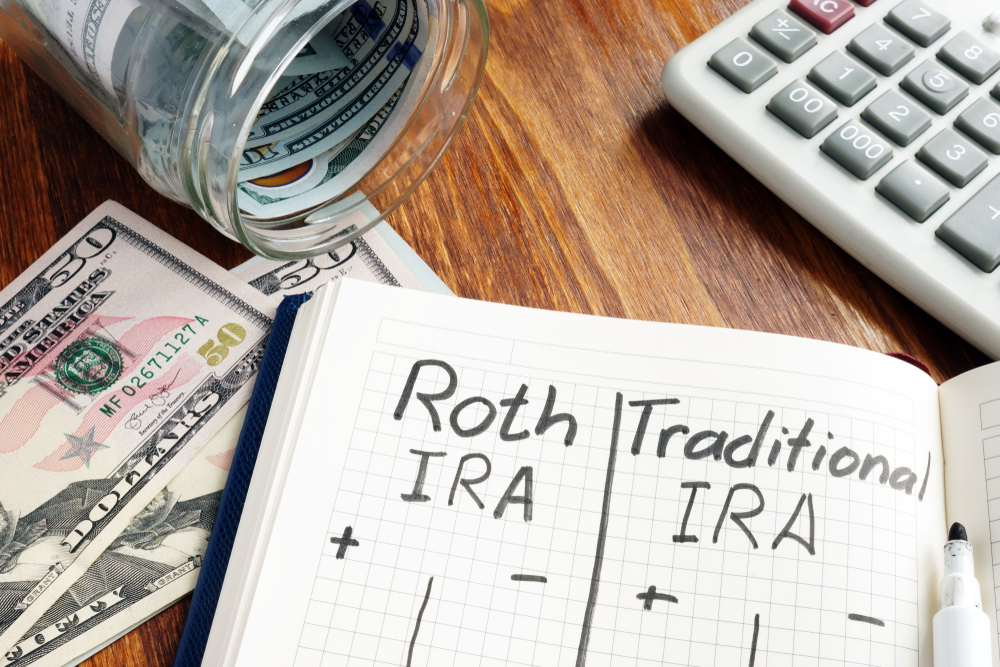
The biggest difference between a traditional IRA and a Roth IRA is how taxes work. With a traditional IRA, contributions may be deductible, but withdrawals are usually included in taxable income. With a Roth IRA, contributions are not deductible, but qualified withdrawals are generally tax-free (Myers 2020).
The Tax Tradeoff
That tax tradeoff is the heart of a Roth conversion. You are choosing to pay taxes now on the taxable amount converted, with the goal of creating more tax-friendly income later. This is why the timing and amount of a conversion matter so much.
How Roth Conversions Are Taxed
Taxes in the Year You Convert
When you convert pre-tax money into a Roth IRA, the taxable portion is generally included in your gross income for the year of the conversion. Federal regulations explain that amounts converted to a Roth IRA are included in gross income as a distribution, except for any portion treated as a return of basis (26 C.F.R. § 1.408A-4). In plain English, if the money has not been taxed before, it will likely be taxed when you convert it.
Why the Numbers Matter
This can be a good planning opportunity, but it can also create surprises if the numbers are not reviewed ahead of time. A large conversion could push you into a higher tax bracket, affect the taxation of Social Security benefits, or create other income-related consequences. The same regulation notes that taxable conversion amounts are generally included in income for all purposes, which is why planning around your total income is so important (26 C.F.R. § 1.408A-4).
Partial Conversions Can Help
This does not mean you should avoid Roth conversions. It means you should approach them carefully. A smaller partial conversion over several years may be more effective than one large conversion that creates an unnecessary tax burden.
Why Consider a Roth Conversion?
Potential Tax-Free Withdrawals
One of the biggest advantages of a Roth IRA is the potential for tax-free qualified distributions. The IRS states that Roth IRA qualified distributions are tax-free if requirements are met (Internal Revenue Service 2025b). For someone who expects taxes to be higher in the future, or who wants more control over taxable income in retirement, this can be a valuable benefit.
Reducing Future RMD Pressure
Roth IRAs can also help reduce pressure from required minimum distributions. Traditional IRAs are generally subject to RMDs, which are annual withdrawals that must begin at a certain age. The Congressional Research Service explains that RMD rules are designed to ensure retirement accounts are used for retirement purposes rather than simply becoming tax shelters or estate planning tools (Myers 2020).
More Control Over Your Money
Roth IRAs work differently for the original account owner. IRS guidance says Roth IRA owners can leave amounts in the account as long as they live, and the IRS Roth IRA overview notes that Roth IRAs are not subject to the same lifetime required minimum distribution rules as traditional IRAs (Internal Revenue Service 2025a; Internal Revenue Service 2025b). That can give retirees more control over when and how they use their money.
Roth Conversions and Retirement Income Planning
More Than One Income Source
A Roth conversion is really a retirement income planning decision. Most families do not rely on one account or one income source in retirement. They may have Social Security, pensions, IRAs, 401(k)s, taxable investment accounts, annuities, business income, or other assets.
Retirement Accounts Fit Into a Bigger Picture
The Federal Reserve’s Survey of Consumer Finances shows how broad retirement planning can be, tracking family balance sheets, retirement accounts, and other financial assets across U.S. households (Board of Governors of the Federal Reserve System 2023). A Congressional Research Service report also notes that Americans prepare for retirement through many types of financial assets, including retirement accounts, brokerage accounts, pensions, and investment funds (Su 2024). That matters because each account type may be taxed differently.
Creating Flexible Retirement Buckets
Having Roth money gives you another bucket to pull from. In a high-income year, Roth withdrawals may help avoid adding more taxable income. In a lower-income year, traditional IRA withdrawals may make more sense. The value comes from flexibility, and flexibility can be one of the most important parts of a retirement income strategy.
When a Roth Conversion May Make Sense
Lower-Income Years
A Roth conversion may be worth considering in a year when your income is lower than normal. This could happen after retirement but before Social Security begins, during a career transition, after a business slowdown, or before required minimum distributions begin. In those years, you may have room to convert some money at a more favorable tax rate.
Higher Future Tax Expectations
It may also make sense if you believe your tax rate could be higher later. That could be because of future RMDs, pension income, Social Security, investment income, or possible tax law changes. No one can predict future tax rates with certainty, but a thoughtful plan can help you compare today’s tax cost with tomorrow’s potential benefit.
Legacy Planning Goals
A conversion may also be useful for legacy planning. Roth IRAs can still have distribution rules for beneficiaries, but Roth assets may be more tax-efficient for heirs than traditional IRA assets. CRS notes that Roth IRA withdrawals are generally tax-free, while traditional IRA withdrawals are included in taxable income (Myers 2020).
Important Rules to Know
Conversion Methods
Roth conversions are flexible, but they are not something to rush through. IRS Publication 590-A explains that you can convert amounts from a traditional IRA to a Roth IRA in several ways, including a rollover, trustee-to-trustee transfer, or same-trustee transfer (Internal Revenue Service 2025a). A direct transfer is often simpler because the money moves directly between trustees.
Conversions Usually Cannot Be Undone
You also need to know that conversions cannot generally be undone. IRS Publication 590-A states that a conversion from a traditional IRA to a Roth IRA, or a rollover from another eligible retirement plan to a Roth IRA, made after December 31, 2017, cannot be recharacterized back to a traditional IRA (Internal Revenue Service 2025a). That makes it even more important to review the tax impact before completing the conversion.
Early Withdrawal Rules
Early withdrawal rules are another key point. The IRS says IRA distributions before age 59½ may be subject to a 10% additional tax unless an exception applies, and that tax is in addition to regular income tax on the taxable amount (Internal Revenue Service 2025c). A properly handled Roth conversion itself may avoid the early distribution penalty, but taking money out too soon after conversion can still create problems.
Common Roth Conversion Mistakes
Converting Too Much at Once
The first mistake is converting too much at once. A large conversion can look attractive because it moves more money into the Roth IRA, but it can also create a tax bill that does more harm than good. The better question is often not “Should I convert?” but “How much should I convert this year?”
Paying Taxes With Retirement Funds
The second mistake is using retirement funds to pay the conversion tax. When possible, paying the tax from non-retirement assets may allow more of the converted money to remain invested in the Roth IRA. If you are under 59½ and pull extra funds from an IRA to cover taxes, the tax and penalty picture can become even more complicated.
Converting Without a Full Plan
The third mistake is ignoring how a conversion fits into your full retirement plan. A Roth conversion should work alongside your income needs, investment strategy, estate plan, and tax plan. Retirement confidence is tied to more than account balances, and the Employee Benefit Research Institute and Greenwald Research note that their Retirement Confidence Survey measures worker and retiree confidence about retirement across a broad sample of Americans (Employee Benefit Research Institute and Greenwald Research 2026).
Our goal is to help you protect your investments, promote consistent growth, minimize unnecessary risk, and create a retirement strategy that supports your future with confidence. If you are wondering whether a Roth conversion belongs in your plan, start with a conversation before making the move. Get expert guidance with McLane Advisors today!
A Roth conversion can be a valuable tool, but it is not automatically right for everyone. The right answer depends on your income, retirement timeline, tax bracket, cash flow, estate goals, and whether you have the funds available to pay the tax bill comfortably. It also depends on how your other accounts are structured. McLane Advisors helps you evaluate Roth conversions with a disciplined, long-term view.
We focus on your Financial Growth
McLane Advisors: Trusted Texas financial advisors with decades of expertise in wealth management, retirement planning, and investment strategies. Safeguard your future with personalized solutions.
McLane Advisors: Trusted Texas financial advisors for three generations, providing tailored strategies for financial security in Texas and 23 other states.
Securities and advisory services offered through Centaurus Financial, Inc. Member of FINRA http://www.finra.org/index.htm and SIPC http://www.sipc.org/. A Registered Investment Advisor. Supervisory office: 540 Fort Evans Rd NE, STE. 200 Leesburg, VA 20176, 714-456-1790. McLane Advisors and Centaurus Financial, Inc. are not affiliated. This is not an offer to sell securities, which may be done after proper delivery of a prospectus and client suitability has been reviewed and determined. Information relating to securities is intended for use by individuals residing in TX,AL,AR,AZ,CA,CO,FL,GA,IA,ID,LA,MD,MO,MS,NC,NM,OH,OK,OR,PA,SC,TN,UT,VA,WA,WI,WV.
Securities and advisory services offered through Centaurus Financial, Inc. Member of FINRA http://www.finra.org/index.htm and SIPC http://www.sipc.org/. A Registered Investment Advisor. Supervisory office: 540 Fort Evans Rd NE, STE. 200 Leesburg, VA 20176, 714-456-1790. McLane Advisors and Centaurus Financial, Inc. are not affiliated. This is not an offer to sell securities, which may be done after proper delivery of a prospectus and client suitability has been reviewed and determined. Information relating to securities is intended for use by individuals residing in TX,AL,AR,AZ,CA,CO,FL,GA,IA,ID,LA,MD, MO,MS,NC,NM,OH,OK,OR,PA,SC,TN, UT,VA,WA,WI,WV.